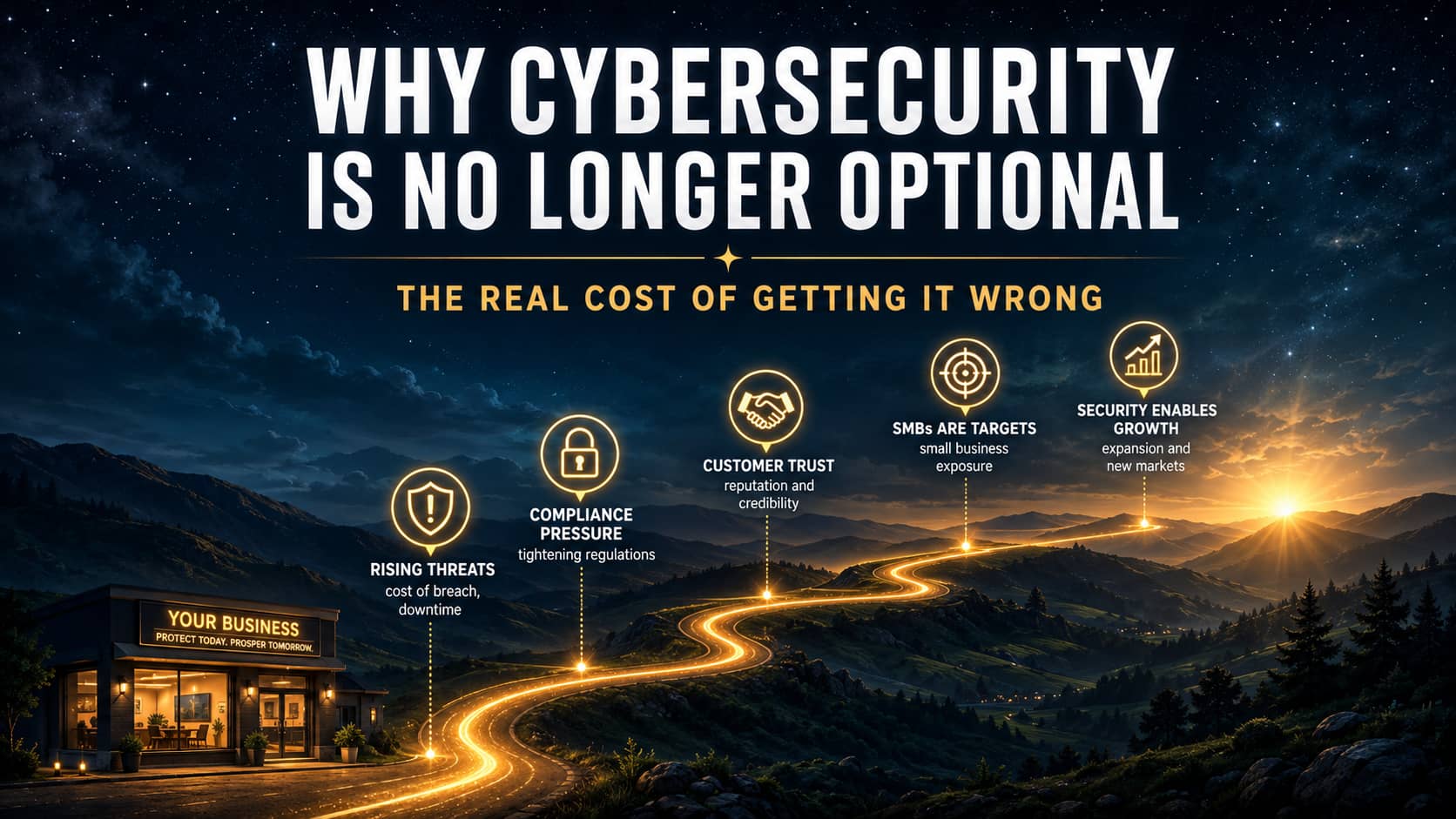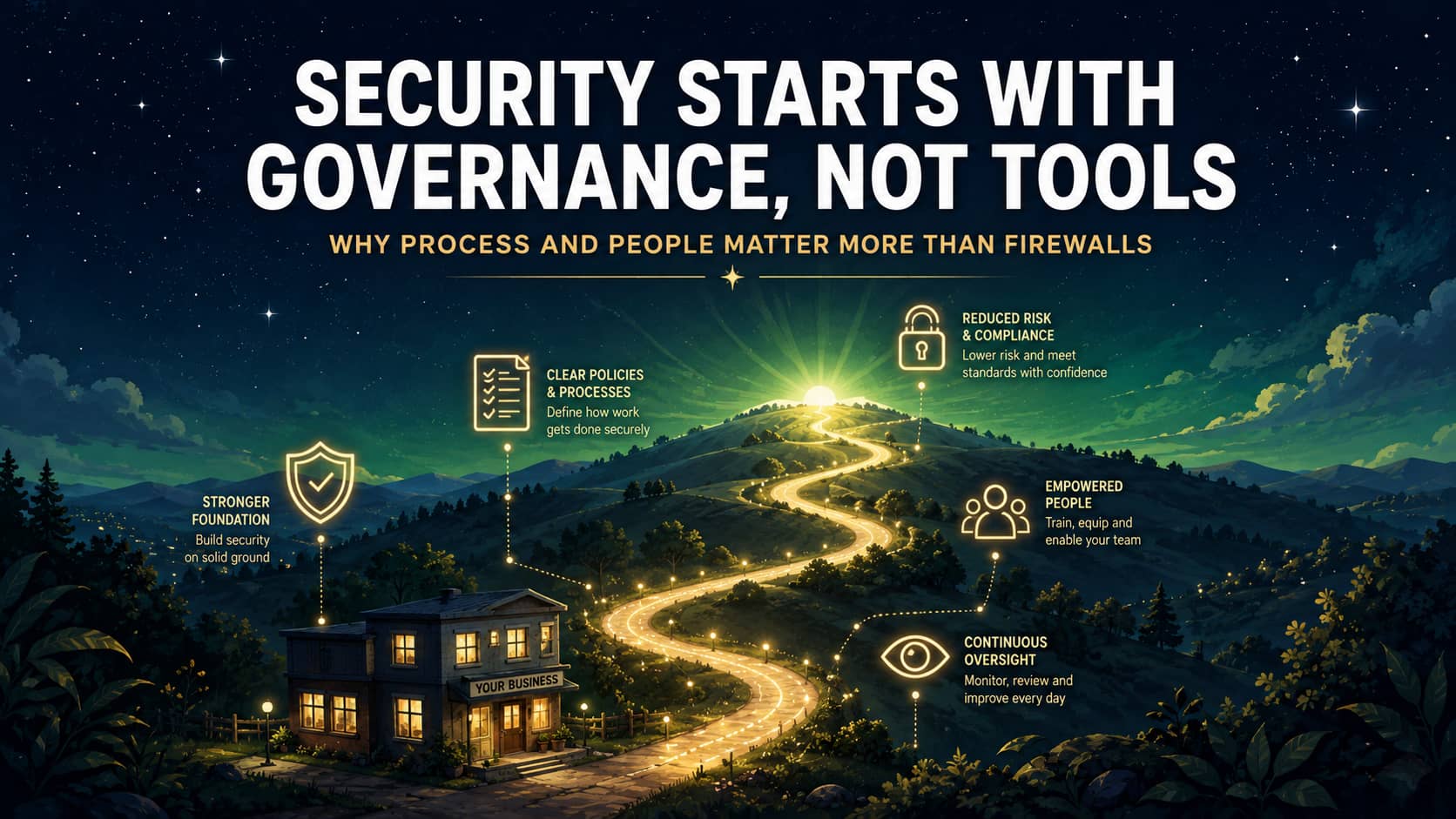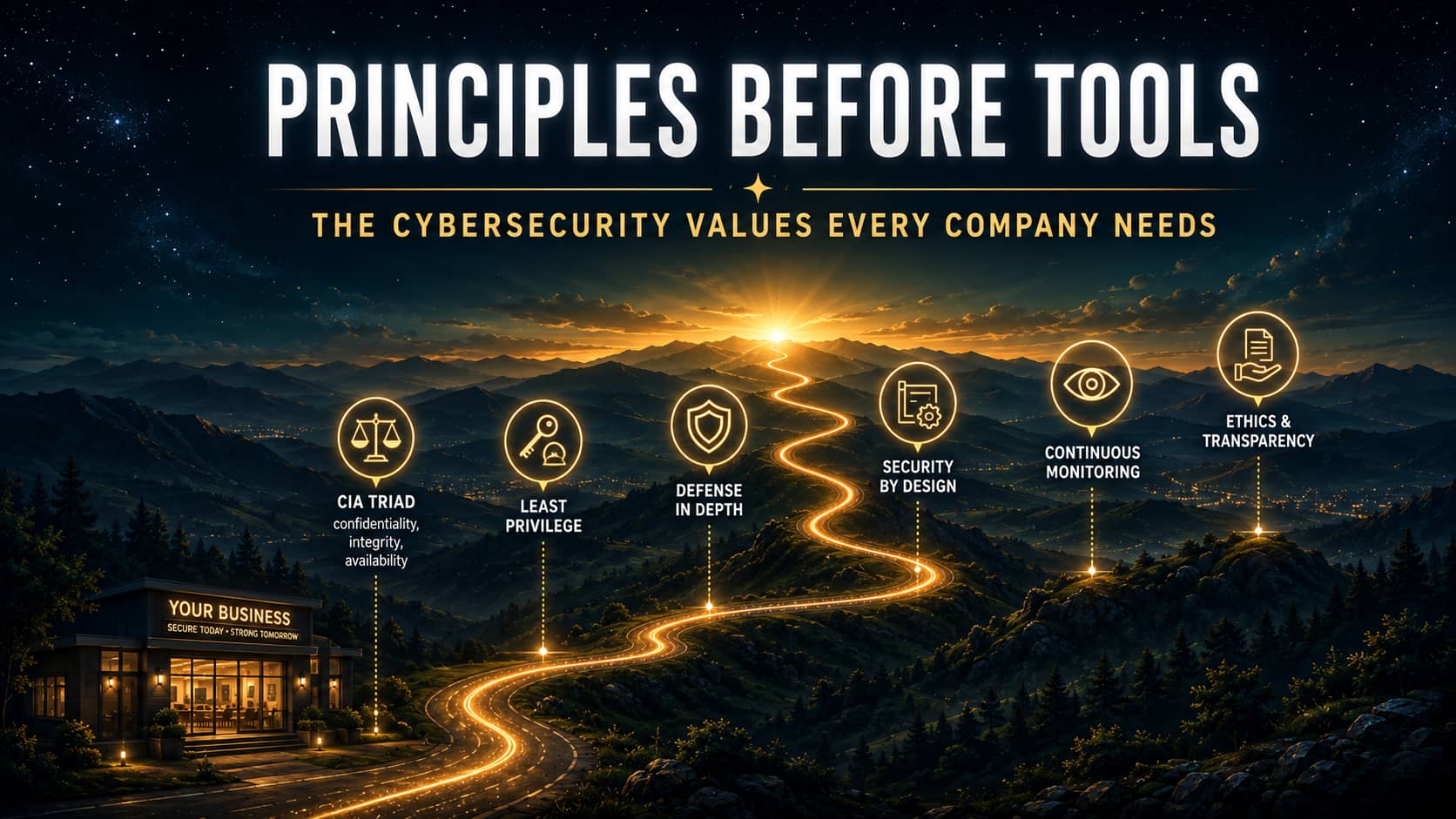
Having security tools in place is not the same as having a security culture. Firewalls, antivirus software, and compliance checklists matter, but they only work when they sit on top of clear principles and a genuine ethical commitment to protecting the people whose data a business holds. This is where many companies fall short — treating cybersecurity as a technical layer instead of a set of values that shape decisions across the entire organization.
Below are the core principles and ethical commitments that should guide how any company approaches cybersecurity, supported by current data on why each one matters.
Core Cybersecurity Principles
1. Confidentiality, Integrity, and Availability (The CIA Triad)
This is the foundation of information security practice: confidentiality ensures only authorized people can access sensitive information, integrity ensures data stays accurate and unaltered, and availability ensures systems remain accessible to those who need them. Every security decision — from access controls to backup strategy — should trace back to one or more of these three pillars.
2. Least Privilege
Employees, systems, and third-party vendors should only have access to the data and systems strictly necessary for their role. This principle matters more than ever: Verizon's 2025 DBIR found that third-party involvement in breaches doubled year-over-year to 30%, and credential abuse was the leading initial attack vector, present in 22% of breaches [1]. Over-permissioned accounts and unmonitored vendor access are among the most preventable causes of major incidents.
3. Defense in Depth
No single control is enough on its own. Verizon's 2025 data shows exploitation of vulnerabilities rose 34% year-over-year, with attackers increasingly targeting perimeter devices and VPNs directly [1]. A resilient posture layers network security, endpoint protection, access controls, monitoring, and staff awareness, so that if one layer fails, others still hold.
4. Security by Design
Security should be built into systems from the start, not bolted on afterward — whether it's a new website, an internal tool, or a customer-facing application. This matters because breach costs vary sharply by how data is stored: IBM's 2025 report found that breaches involving data spread across multiple environments cost an average of USD 5.05 million, compared to USD 4.01 million for breaches confined to on-premises systems [2] — underscoring that fragmented, poorly designed architecture is itself a cost driver.
5. Continuous Monitoring and Improvement
Threats evolve constantly. IBM found that faster identification and containment were the single biggest factor behind the 9% global drop in average breach costs in 2025, with mean detection time falling to 241 days, the lowest in nine years [2]. Regular vulnerability assessments, penetration testing, and log monitoring are what make faster detection possible — cybersecurity is a continuous process, not a project with a completion date.
6. Incident Preparedness
It is not a question of if an incident will occur, but when. Ransomware alone was present in 44% of all breaches analyzed in Verizon's 2025 DBIR, up 37% year-over-year [1]. Companies need a documented, tested incident response plan covering detection, containment, communication, and recovery — because improvising a response under pressure is far more costly than executing a rehearsed one.
Ethical Commitments a Company Should Uphold
Principles describe how to secure systems. Ethics describe why it matters and who a company is accountable to.
1. Transparency With Customers and Users
When a breach occurs, companies have an ethical obligation to disclose it promptly and honestly rather than delay disclosure to protect reputation. This is not a minor point: 60% of 2025 breaches involved a human element, meaning most incidents are ultimately traceable to a preventable mistake or process gap — something customers deserve to know about rather than have concealed [1].
2. Data Minimization
Ethical data practice means collecting only what is genuinely needed. Shadow AI use — employees uploading company data to unsanctioned AI tools — was a factor in 20% of breaches in 2025 and added an average of USD 670,000 to breach costs, largely because sensitive data ends up outside any security team's visibility [2]. The less unnecessary data a company holds or exposes to ungoverned tools, the less damage any single incident can cause.
3. Responsible Disclosure and Fair Treatment of Researchers
Companies should welcome, not punish, security researchers who responsibly report vulnerabilities. A clear, respectful disclosure process signals organizational maturity and builds goodwill within the security community.
4. Accountability Over Blame
When incidents happen — including those caused by employee error — the ethical response is to fix root causes, not scapegoat individuals. Research on the psychology of human error has found that when organizations judge mistakes harshly, employees become less willing to report them early, which tends to make incidents worse, not better.
5. Honest Vendor and Partner Relationships
Any company providing security services has an ethical duty to be honest about the limits of what it can protect against. Given that 63% of organizations still lack formal AI governance policies even as AI adoption accelerates [2], overselling "guaranteed security" is both dishonest and dangerous — no system is 100% secure, and pretending otherwise sets clients up for false confidence.
6. Respecting Employee Privacy Alongside Security Monitoring
Security monitoring is necessary, but it should be balanced against reasonable employee privacy expectations. Clear, disclosed monitoring policies help maintain trust internally, not just externally.
Bringing Principles and Ethics Together
A company that implements only technical controls without an ethical foundation will eventually make decisions that damage trust — delaying breach disclosure, over-collecting data, or treating security as a marketing checkbox. A company with good intentions but weak technical practices will still fail to protect the people relying on it. The strongest security posture combines both: rigorous principles paired with genuine accountability to the people whose data and trust are on the line. Increasingly, that combination is what separates businesses that survive a security incident from those that don't.
References
[1] Verizon, 2025 Data Breach Investigations Report (DBIR), Verizon Business, Basking Ridge, NJ, USA, Apr. 2025. [Online]. Available: https://www.verizon.com/about/news/2025-data-breach-investigations-report
[2] IBM Security, Cost of a Data Breach Report 2025, IBM Corp., Armonk, NY, USA, 2025. [Online]. Available: https://www.ibm.com/reports/data-breach
[3] International Organization for Standardization, "The ISO Survey 2024 — ISO/IEC 27001 certificates," ISO, Geneva, Switzerland, 2025. [Online]. Available: https://www.iso.org/the-iso-survey.html